For years, Dubai marketed itself as the Middle East’s escape hatch, a city where geopolitics stopped at the airport lounge. While the region wrestled with wars and sanctions, deals were signed in glass towers, tourists packed beach resorts, and flights took off every few minutes.
That carefully built image took a hit this week.
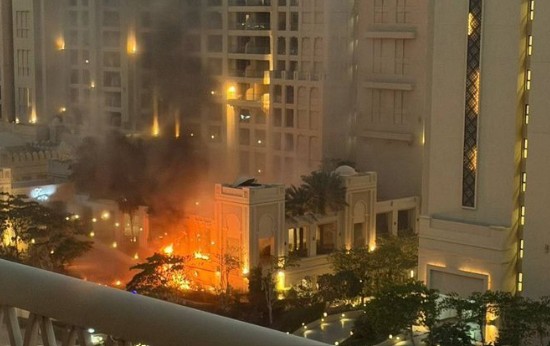
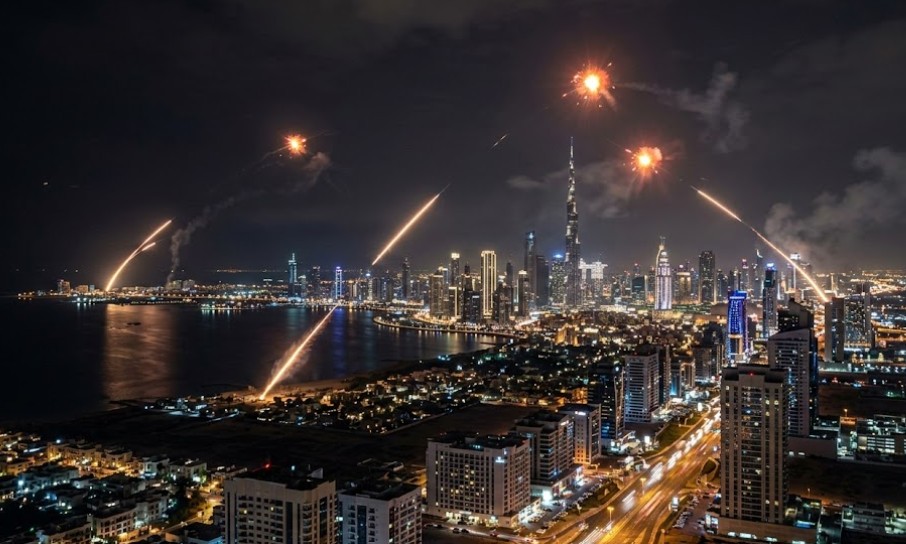
As tensions exploded between Iran and a US-Israeli coalition, the conflict dramatically spilled into the Gulf. Iranian missiles and drones targeted the UAE, with impact zones and debris reported in and around Dubai. A city long considered untouchable was suddenly in the headlines for all the wrong reasons.
The big question: why would Iran risk targeting a global business hub that has also quietly served as a financial and trade lifeline for many Iranians?
Not Just a Military Message, An Economic One
On the surface, this looks like a military escalation. But the choice of targets suggests something deeper.
Areas near high-profile landmarks such as Palm Jumeirah and the sail-shaped Burj Al Arab were reportedly within the broader strike zones. Air traffic disruptions at Dubai International Airport added to the shock.
These are not random locations. They represent the very engine of Dubai’s economy, tourism, aviation, real estate, and global finance.
For Iran, analysts say, the message is blunt: if Tehran’s economy is squeezed by war and sanctions, the region’s prosperity won’t go untouched either. By rattling Dubai’s sense of security, Iran may be trying to raise the economic cost of the broader military campaign against it.
If investors begin to see Dubai as vulnerable, even temporarily, the impact could be immediate — from higher insurance premiums and capital outflows to postponed mega projects.
The Strategic Layer: US Bases in the UAE
There is also a hard security dimension to this escalation.
The UAE hosts key Western military facilities, including Al Dhafra Air Base, a major hub for US operations, and Al Minhad Air Base, used by allied forces including Australia and the UK.
Tehran has maintained that its actions are directed at the US military presence in the region, not at Emirati civilians. From its standpoint, any country that allows its territory to be used for operations against Iran risks becoming part of the battlefield.
In that sense, Dubai’s global image does not shield it from regional power politics.
A Relationship Rewritten
What makes this episode more striking is the history between Dubai and Tehran.
Despite sanctions, Dubai has long been a trading artery for Iranian businesses. Goods, capital, and people moved between the two shores of the Gulf, creating a complex web of economic interdependence. There was an unspoken understanding: business would continue, and tensions would be managed.
This week’s events suggest that understanding has frayed.
By allowing strikes that affected Dubai’s vicinity, Iran appears willing to sacrifice economic convenience for strategic signaling. It reflects a shift from cautious pragmatism to open deterrence, a sign that regional calculations have hardened.
The Global Ripple Effect
The fallout is not confined to the UAE.
Energy Markets: With the Strait of Hormuz effectively closed, oil and gas prices have surged. Any prolonged disruption in this narrow waterway, through which a significant share of global energy supplies passes, could push fuel costs higher worldwide.
Air Travel: Disruptions at Dubai International Airport, one of the busiest international transit hubs, have created knock-on effects for global travel. Thousands of passengers, including a large Indian expatriate community, have faced delays and cancellations.
Financial Markets: Investors have turned cautious. Equity markets are volatile, while safe-haven assets such as gold and the US dollar have seen renewed demand. For emerging markets dependent on imported oil, the spike in prices adds fresh pressure.
What’s at Stake for Dubai
Dubai’s greatest strength has always been predictability. Contracts are honoured, infrastructure works, and geopolitics rarely interrupt business.
That reputation is now being tested.
Even if the physical damage is limited, perception matters. Global capital moves quickly, and often reacts to headlines as much as to hard data. The longer tensions persist, the greater the risk that confidence takes a hit.
For Iran, the strategy appears clear: widen the cost of conflict beyond its borders. For Dubai and the UAE, the challenge is equally stark: contain the damage, restore calm, and reassure the world that the Gulf’s most dynamic economy remains open for business.
As the confrontation deepens, one thing is certain: the idea that Dubai is insulated from regional conflict no longer looks guaranteed.