As missiles fly between Israel and Iran, most headlines are focused on fears of a wider war, rising oil prices, and the tragic loss of lives. Images of explosions and smoke over cities dominate the news cycle.
But while the world watches the battlefield, another crisis is quietly building in the background, the impact on our planet. Wars don’t just destroy cities and infrastructure; they also leave behind a heavy environmental footprint.
From fuel-burning fighter jets to damaged oil and gas facilities, the ongoing tensions in West Asia could add a surprising amount of pollution to the atmosphere. Here’s a simple look at how conflicts like this can worsen the climate crisis.
War Machines Burn Huge Amounts of Fuel
Modern military operations rely heavily on fossil fuels. Tanks, fighter jets, ships, and transport aircraft all consume massive quantities of fuel.
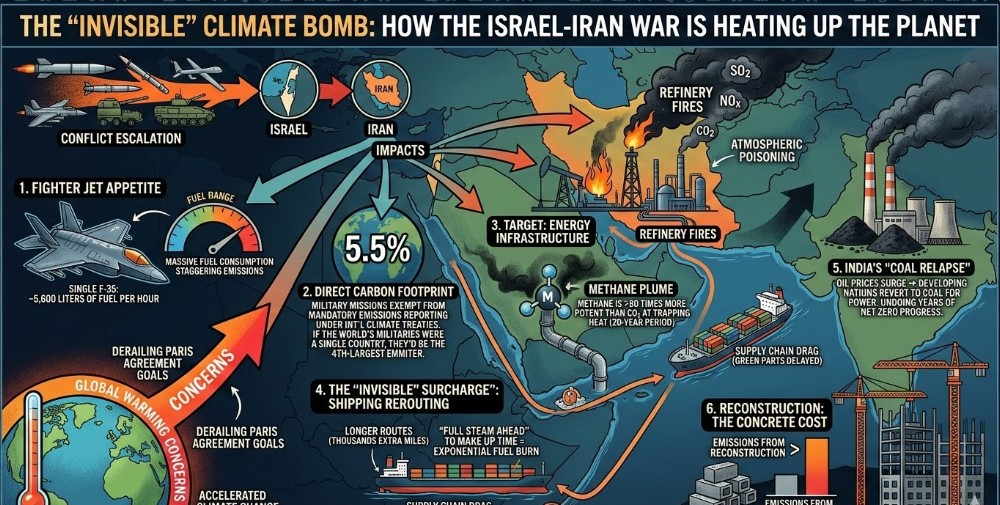
For example, the Lockheed Martin F-35 Lightning II fighter jet, one of the most advanced aircraft used today, burns roughly 5,600 litres of fuel every hour during operations. When dozens or even hundreds of such aircraft fly missions daily, the total emissions can quickly become enormous.
Researchers often point out an interesting fact: if the world’s armed forces were treated as one country, they would rank among the largest greenhouse-gas emitters globally. Yet military emissions are not always fully reported under global climate agreements like the United Nations Framework Convention on Climate Change.
During the first few months of the recent Gaza conflict, experts estimated that the emissions produced were higher than those of 26 individual countries combined. A wider war involving Israel and Iran could push those numbers even higher.
When Energy Facilities Become Targets
In modern wars, energy infrastructure often becomes a key target. Oil refineries, gas fields, and storage depots are critical for a country’s economy, and that makes them vulnerable during conflict.
Recent strikes near cities such as Tehran and Haifa have led to fires at oil facilities, sending thick black smoke into the sky. This smoke contains carbon dioxide, sulfur dioxide, and other harmful pollutants that damage air quality and contribute to global warming.
Another major concern is methane leakage. Gas fields like Iran’s massive South Pars Gas Field hold huge reserves of natural gas. If pipelines or processing plants are damaged, methane can escape into the atmosphere. Methane is a powerful greenhouse gas, it traps far more heat than carbon dioxide over a short period.
There is also the risk of oil spills in the Persian Gulf. Because the Gulf is relatively enclosed, oil spills can remain in the water for a long time, harming marine life and damaging coastal ecosystems such as mangroves that help absorb carbon.
Rising Oil Prices Could Push Countries Back to Coal
The effects of war are not limited to the countries involved. Energy markets around the world react quickly to conflict in oil-producing regions.
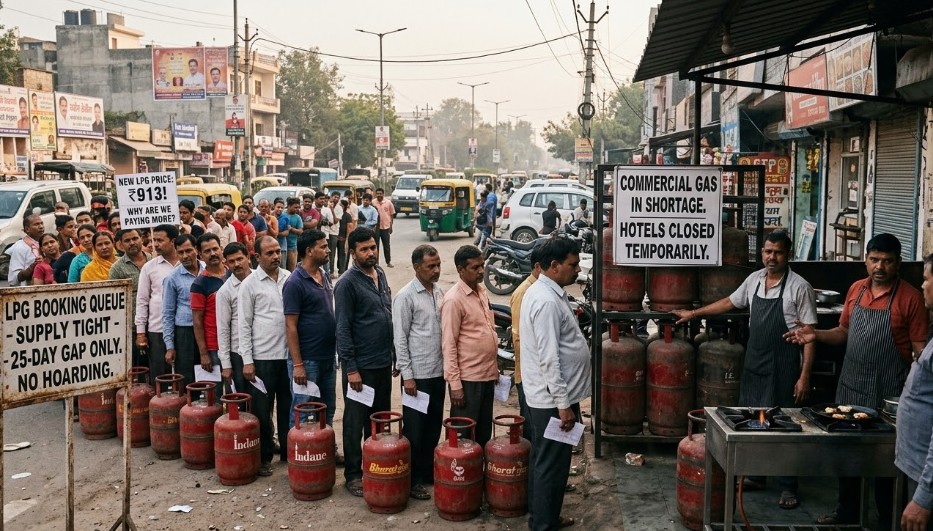
If crude oil prices climb sharply, countries that depend heavily on energy imports, including India, may face difficult choices. Governments sometimes turn back to cheaper but more polluting fuels like coal to keep electricity supplies stable.
This temporary return to coal can slow down progress toward cleaner energy and climate targets, especially for developing economies.
Rebuilding After War Also Adds Emissions
Even after the fighting ends, the environmental impact continues.
Cities damaged by war must be rebuilt, and reconstruction requires enormous amounts of cement, steel, and other materials. Cement production alone is responsible for a significant share of global carbon emissions.
Studies suggest that the emissions produced during rebuilding efforts can be several times higher than those created during the conflict itself.
In places like the Gaza Strip, researchers have estimated that rebuilding destroyed homes, roads, and infrastructure could produce carbon emissions comparable to those of more than 100 countries in a year.
A Hidden Impact Most People Don’t See
When wars dominate the news, environmental damage rarely becomes the main story. Yet the climate cost of conflict can last for decades.
At a time when the world is already struggling to limit global warming under agreements such as the Paris Agreement, large-scale wars make the challenge even harder.
In the end, the damage goes far beyond the battlefield. Along with cities and lives, the planet itself becomes another silent casualty of war.